
Medical Devices: Hybrid Manufacturing for Precise Components and Instruments
Medical devices must meet the highest standards. Precision, material quality, clean surfaces, and a manufacturing process that can be reliably scaled from development to series production are all crucial.
This is exactly where hybrid manufacturing shows its strengths. We combine additive manufacturing, precise CNC machining, and high-quality surface finishing to produce complex components and instruments economically and with assured quality. For medical device manufacturers, this means increased design flexibility, faster development cycles, and precision exactly where functional performance matters most.
What is the biggest challenge in manufacturing medical devices today?
Anyone developing medical devices, medical-related components, or instruments often faces a conflict of goals: on the one hand, demands regarding function, ergonomics, and miniaturization continue to increase. On the other hand, conventional manufacturing processes quickly reach their limits when it comes to complex geometries, small batch sizes, or short development cycles.
Typical challenges related to medical devices include:
- design limitations caused by conventional machining
- high costs for complex geometries
- economic hurdles for prototypes and small series
- complex transitions between development, testing, and series production
- high requirements regarding surface quality, cleanability, and documentation
Particularly in the medical device industry, a component cannot just be produced arbitrarily. It needs to fit into your overall process from a functional, regulatory, and commercial perspective.

How does hybrid manufacturing help with medical devices?
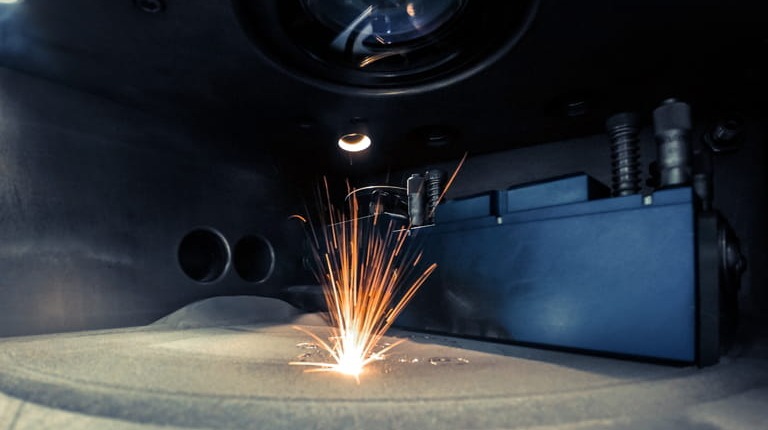
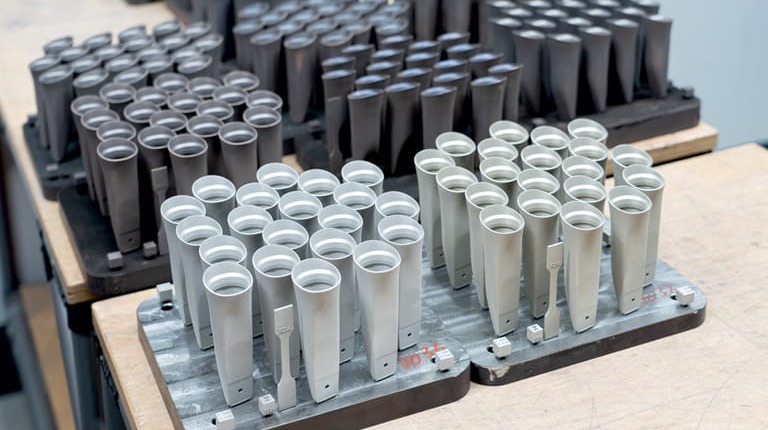
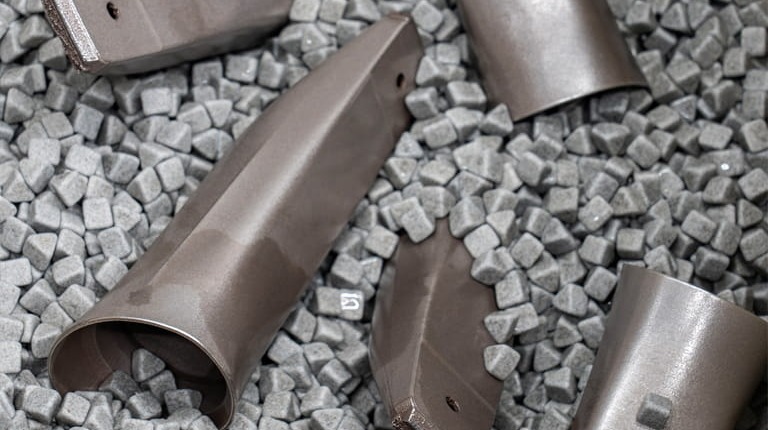
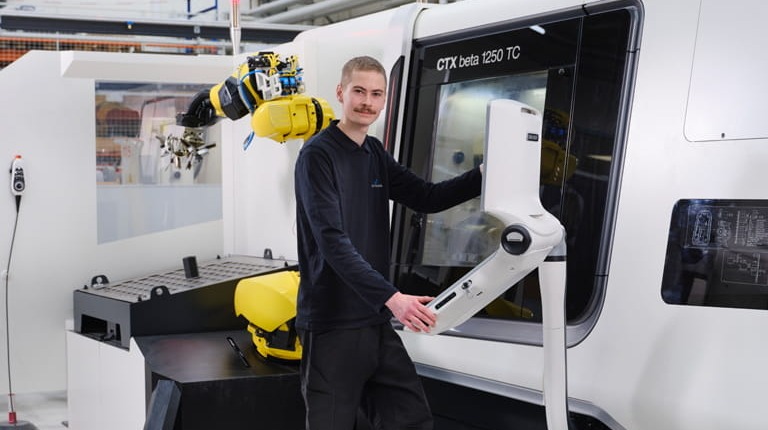
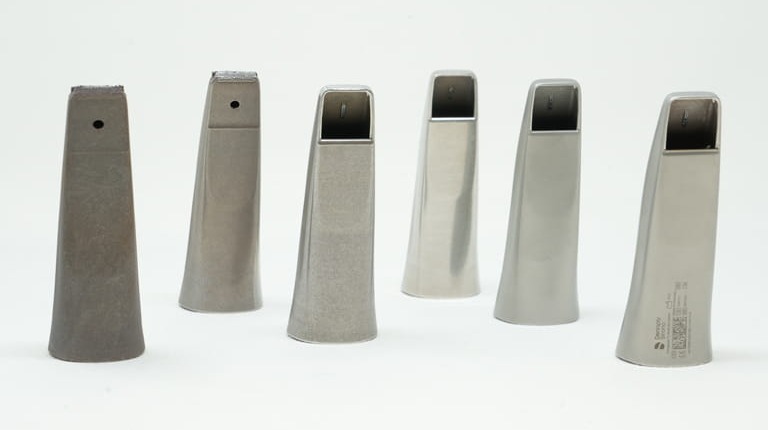
Hybrid manufacturing combines several manufacturing strengths in one coordinated process. We use additive manufacturing for complex, near-net-shape geometries. Afterwards, our CNC machining and targeted surface finishing ensure that functional surfaces, fits, and finishes meet the exact requirements of the component.
In concrete terms, this means:
- Additive manufacturing creates previously unimaginable freedom in design and reduces geometric limitations
- CNC machining delivers maximum precision in function-critical areas
- Surface finishing supports hygienic, technical, and visual requirements alike
This creates an efficient manufacturing approach for medical devices.
Why is hybrid manufacturing especially useful for medical devices?
Medical devices often consist of components that must meet several requirements at the same time: mechanical stability, tight tolerances, clean surfaces, good cleanability, and secure integration into an overall system.
With the hybrid manufacturing approach of Robert Hofmann GmbH, these requirements can be implemented more precisely than with just one single manufacturing process.
The benefits for your company at a glance:
- maximum design freedom for complex geometries
- precision exactly at functional interfaces
- faster development and iteration cycles
- economical production of small and medium-sized batches
- component integration instead of complex assemblies
- better scalability from prototype to series production
Especially for medical devices, where development speed and validation are equally important, our approach has a clear advantage.
Which materials are suitable for medical devices in hybrid manufacturing?
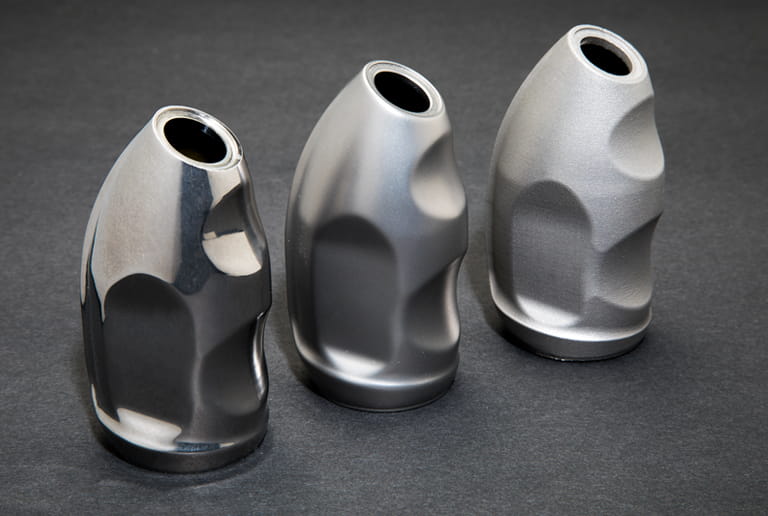
Established stainless steels play an important role in hybrid manufacturing processes for medical devices. Particularly relevant are 1.4542 (17-4PH) and 1.4404 (316L).
1.4542 (17-4PH): For highly stressed components and instruments
This stainless steel is particularly suitable for applications where high strength and very good mechanical properties are required. That is why 1.4542 is an interesting choice for highly stressed components, technical functional parts, and robust instruments.
Advantages of 1.4542:
- high strength
- good hardness values
- very good mechanical properties
- ideal for highly stressed components and instruments
1.4404 (316L): For corrosion-resistant and medical-related applications
1.4404 is known for its excellent corrosion resistance and its very good suitability for sensitive, medical-related areas of use. This material is therefore a strong choice for components of medical devices that depend on durability and material reliability.
Advantages of 1.4404:
- excellent corrosion resistance
- very good biocompatibility
- ideally suited for fluid-carrying and medical-related applications
- proven material for demanding components
Which products is this manufacturing approach suitable for?
Hybrid manufacturing is especially useful wherever medical devices or instruments need to combine complex geometries with high precision.
Typical fields of application include:
- medical instruments
- medical devices
- medical technology components
- functional stainless steel parts
- housings, brackets, and interface components
- components with high requirements for precision and surface quality
Especially in medical technology, it often makes sense to simplify assemblies and integrate functions into individual parts. This reduces interfaces, saves assembly effort, and can increase reliability. Feel free to contact us about this.

Practical example:
How hybrid approaches work in medical technology
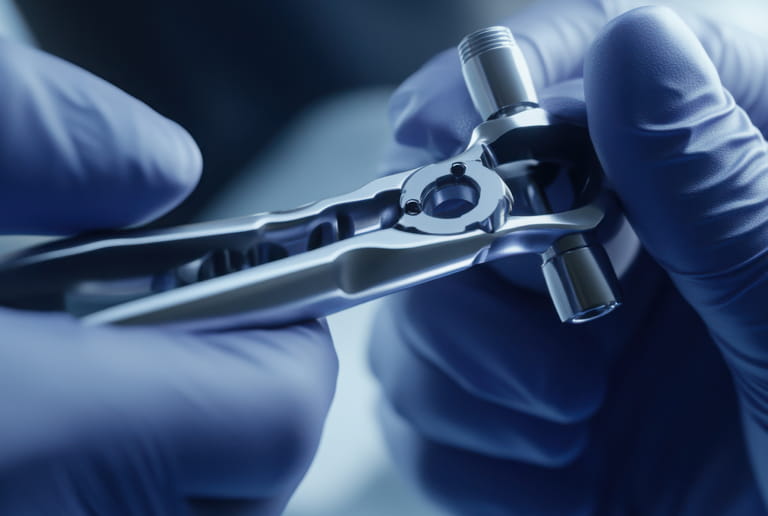
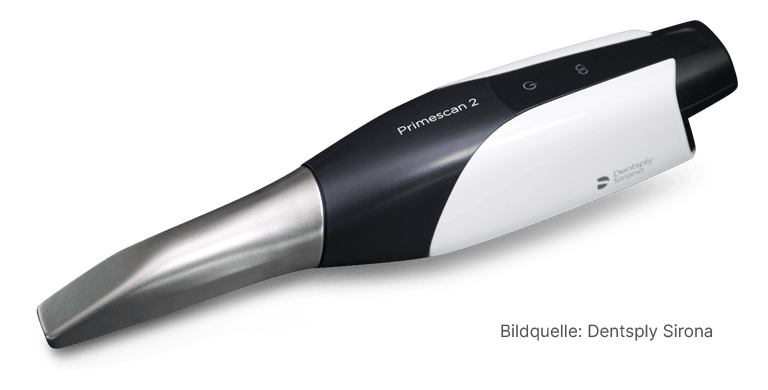
A concrete example from the Medical & Healthcare sector of Robert Hofmann GmbH is the case study on the Primescan™ 2 Multiuse Sleeve for Dentsply Sirona. In this project, our customer was looking for a new technology to manufacture this component. This example shows that the complex requirements of medical devices can be implemented in a practical and industrially viable way using modern manufacturing strategies.
What role do quality and regulatory requirements play in medical devices?
For medical devices, manufacturing is never just a question of geometry. Documented processes, traceability, and integration into a robust quality management system are equally important.
At our company, the Medical & Healthcare sector is integrated into quality processes compliant with DIN EN ISO 13485. This makes us your ideal partner for customized prototypes and series production in the medical field. You benefit from our combination of precision, process reliability, and regulatory understanding.
What matters here:
- use of established materials
- controlled and verifiable process chain
- complete traceability
- documented manufacturing and quality processes
- reliable transfer from development to series production
For manufacturers of medical devices, this is always a crucial point because technical feasibility and regulatory requirements cannot be viewed separately.
Why Robert Hofmann is your partner for medical devices
We combine additive manufacturing, CNC machining, and surface finishing into a hybrid manufacturing approach that offers special advantages for complex medical devices and instruments. This gives you components that are well engineered, functionally precise, and economically feasible.
In doing so, we do not think only in individual manufacturing steps, but in the entire development and production process:
- from CAD model to finished component
- from prototype to series production
- from geometry to function-oriented surface quality
- from feasibility to quality-assured implementation
We develop and manufacture medical devices efficiently
If you develop medical devices, components, or instruments, you need a manufacturing partner who can implement complex requirements in a technologically sound and economical way. The hybrid manufacturing approach of Robert Hofmann GmbH opens up new possibilities for this.
Let us evaluate your component:
Feel free to request a feasibility analysis or speak directly with our experts. Together, we will find the right manufacturing route for your project. We offer the following options for immediate contact:
Send us your NDA in advance for signature:
Send us your data directly by email:
Submit your data via the “TRUfusion” portal:
FAQ on Hybrid Manufacturing for Medical Devices
What are the benefits of hybrid manufacturing for medical devices?
With this approach, we combine the design freedom of additive manufacturing with the precision of CNC machining and the advantages of targeted surface finishing. This is especially interesting for you in the case of complex geometries and function-critical surfaces.
Which materials are particularly relevant for medical devices?
In the application area described here, 1.4542 (17-4PH) and 1.4404 (316L) are the main focus. Both materials offer specific advantages for technical and medical-related applications. Of course, other 3D printing materials can also be used. Feel free to contact us about this.
Is hybrid manufacturing only suitable for prototypes?
No. This approach is suitable for both prototypes and small to medium-sized series. Scalability between development and series production is a key advantage.
Why is surface finishing so important for medical devices?
Because surfaces are not only visually relevant. Depending on the application, they also influence cleanability, hygienic properties, haptics, and technical function.
Can complex assemblies be simplified through hybrid manufacturing?
Yes. Functions can often be integrated into individual components. This reduces assembly effort, interfaces, and potential sources of error.
Always there for you
Contact & Service

Your contact person: Maxime Cerulus
Director Business Development
Medical & Healthcare
Phone: (+49) 9571 949 114
Email: maxime.cerulus@r-hofmann.de